
Jaggery vs Sugar vs Honey vs Date vs Stevia: Which Sweetener Is Actually Healthier?
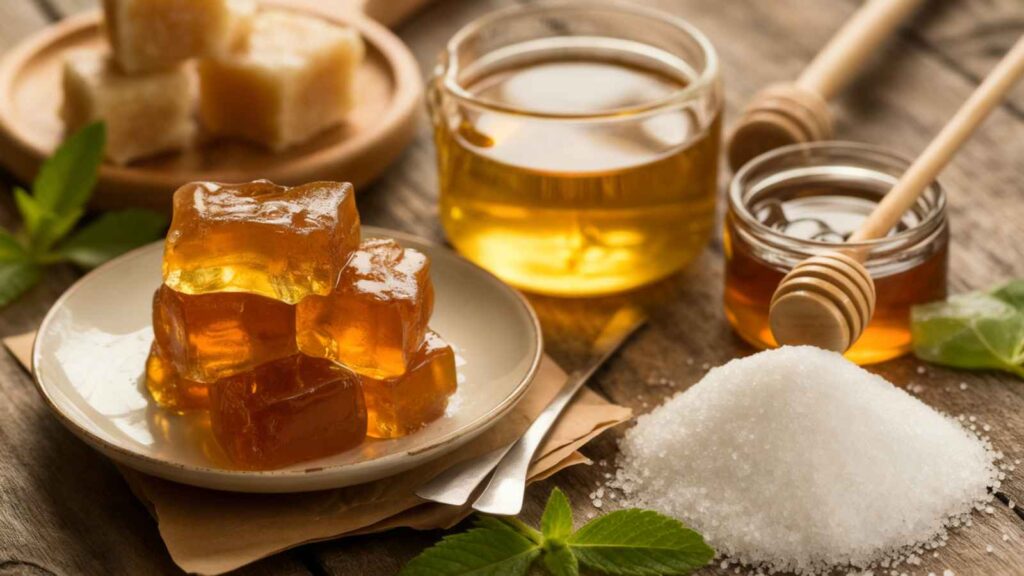
Sweeteners are a part of everyday life. From morning tea and coffee to desserts and snacks, many foods rely on sugar for taste. However, increasing awareness about conditions such as diabetes, obesity, and heart disease has made people more conscious about how much sugar they consume.
Thank you for reading this post, don't forget to subscribe!Because of this, many individuals are now searching for healthier alternatives to refined sugar. Popular options include jaggery, honey, date sugar, and stevia. But are these really better for your health?
Let’s take a closer look at the most commonly used sweeteners and understand how they affect the body.
| Sweetener | Source | Calories (per 100g) | Glycemic Index (GI) | Nutritional Value | Diabetic Friendly |
|---|---|---|---|---|---|
| Jaggery | Unrefined sugarcane juice | ~383 kcal | High (70–84) | Contains small amounts of iron, magnesium, potassium | ❌ Not recommended |
| Refined Sugar | Processed sugarcane or beet | ~387 kcal | High (~65) | No vitamins or minerals (empty calories) | ❌ Not recommended |
| Honey | Natural bee-derived sweetener | ~304 kcal | Medium (50–60) | Contains antioxidants, enzymes, trace vitamins | ⚠️ Limited consumption |
| Dates | Dried and powdered dates | ~277–300 kcal | Medium (42–55) | Rich in fiber, antioxidants, minerals | ⚠️ Limited consumption |
| Stevia | Extract from stevia plant leaves | 0 kcal | 0 | No calories, no sugar | ✅ Suitable for diabetics |
Refined Sugar – High Calories, Low Nutrition
Refined sugar is one of the most widely used sweeteners in households across the world. While it enhances the taste of food and beverages, it provides very little nutritional value.
Sugar is high in calories but contains almost no vitamins, minerals, or fiber. Because of this, it is often described as providing “empty calories.”
Frequent consumption of refined sugar can contribute to several health issues, including:
-
Rapid spikes in blood sugar levels
-
Increased risk of insulin resistance
-
Weight gain and obesity
-
Type 2 diabetes
-
Heart-related problems
For these reasons, many people are trying to reduce their intake of refined sugar and replace it with other sweeteners.
Jaggery – Less Processed but Still Sugar
Jaggery is commonly used in many traditional diets and is considered a more natural alternative to refined sugar. It is produced by boiling sugarcane juice or palm sap without extensive refining.
Compared to refined sugar, jaggery contains small amounts of minerals such as iron, magnesium, and potassium. Because it is less processed, it retains some of the natural components of sugarcane.
However, jaggery still contains similar calories and sugar content as regular sugar. This means it can still raise blood sugar levels.
While jaggery may be a slightly better option than refined sugar, it should still be consumed in moderation, especially for people managing blood sugar or body weight.
Honey – Natural but High in Sugar
Honey is a natural sweetener that has been used for centuries in cooking and traditional remedies. It contains antioxidants and antibacterial properties, which may provide some health benefits.
Honey is also sweeter than sugar, which means smaller quantities can sometimes be used.
However, honey still contains natural sugars such as glucose and fructose. Because of this, it can increase blood sugar levels, similar to other sweeteners.
For people with diabetes or those monitoring their sugar intake, honey should be consumed carefully and in limited amounts.
Date Sugar – A Nutrient-Rich Option
Date sugar is made by grinding dried dates into a fine powder. Unlike refined sugar, it retains many of the natural nutrients present in dates.
Some advantages of date sugar include:
-
Natural fiber content
-
Minerals such as potassium and magnesium
-
Antioxidants
The presence of fiber helps slow down the absorption of sugar in the body, which may help reduce sudden spikes in blood sugar compared to refined sugar.
Date sugar is commonly used in baking and healthy recipes. However, it still contains natural sugars and calories, so moderation is important.
Stevia – A Zero-Calorie Sweetener
Stevia is a plant-based sweetener extracted from the leaves of the stevia plant. It has become increasingly popular as a low-calorie sugar substitute.
The main benefits of stevia include:
-
Zero calories
-
No significant impact on blood sugar levels
-
Suitable for people with diabetes
-
Helpful for weight management
Because it provides sweetness without calories, stevia is often considered one of the best alternatives to refined sugar, especially for individuals who need to limit sugar intake.
Which Sweetener Should You Choose?
Each sweetener has its own advantages and limitations:
-
Stevia is a good option for people managing diabetes or trying to reduce calorie intake.
-
Jaggery and honey are less processed than refined sugar but should still be used in small quantities.
-
Date sugar contains additional nutrients and fiber but still contributes calories and natural sugars.
-
Refined sugar provides taste but very little nutritional value and should be minimized in the diet.
Final Thoughts
Reducing sugar intake is an important step toward improving overall health. Choosing better alternatives and using sweeteners in moderation can help maintain balanced nutrition and support long-term well-being.
For personalized dietary guidance and lifestyle advice, consult the healthcare experts at Punarjith Ayurveda Hospital.
Address:
Punarjith Ayurveda Hospital
South Mazhuvannoor P.O., Mazhuvannoor
Ernakulam District, Kerala – 686869
Phone:
+91 99958 31222
+91 7559964455